


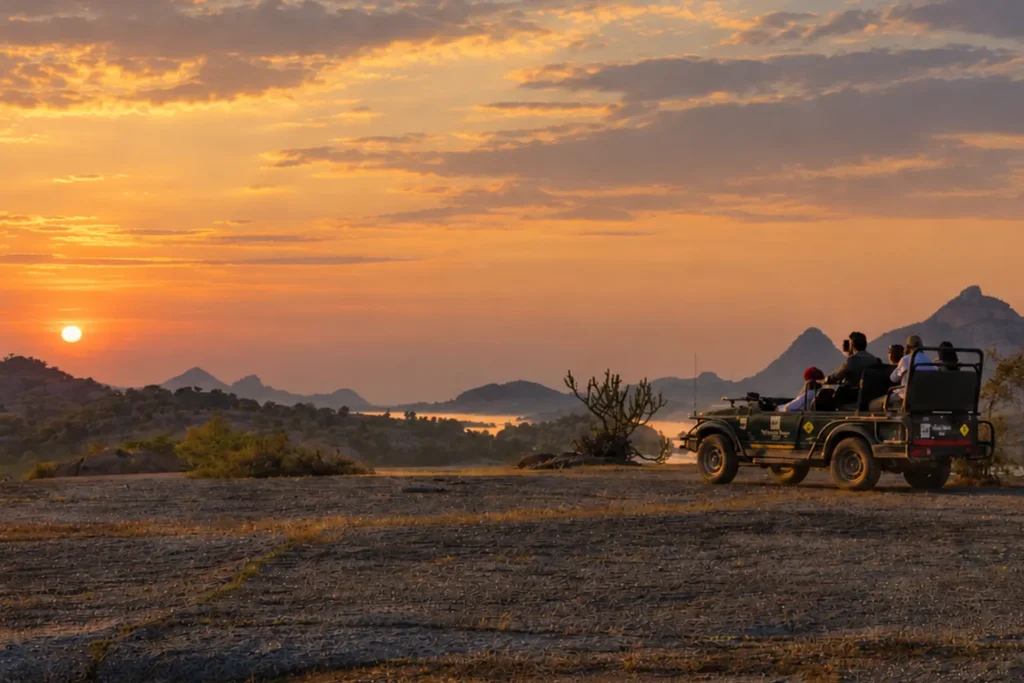
For a first trip to India, the route can feel familiar. You see the Taj Mahal, move through a few historic cities and finish by the coast. But that itinerary can leave out much of what makes the country distinct: its wildlife, varied landscapes, regional food and the ways local culture continues to shape everyday life.
India as a travel destination brings together world-class heritage, the world’s largest share of wild tigers, and a variety of regional food and hospitality across the same country. Its distinction lies not in any one monument, reserve or coastline, but in the way these different layers come together, sometimes within a single journey.
To experience that combination, you need to look beyond the standard itinerary and give yourself more time. What emerges is a fuller sense of India, beginning with the heritage that has shaped its landscapes, cities and communities.
Key Takeaways
- India’s heritage is extensive and still growing, with 45 World Heritage Sites, including Sarnath, added in 2026.
- It is also one of the world’s great wildlife destinations, home to nearly three-quarters of the world’s wild tigers and the last remaining natural habitat of Asiatic lions.
- Heritage sites, wildlife reserves, regional food and distinctive hospitality can sit within a relatively short drive of one another, creating combinations few destinations offer.
- Seasons vary sharply across regions, so experiencing these different sides of India well usually requires a trip of two weeks or more.
India’s Living Heritage
India’s heritage is often where a journey begins, and for good reason. With 45 World Heritage Sites, it ranks sixth globally, spanning ancient cities, temples, forts and historic landscapes. But an ideal Indian travel experience should go beyond visiting a monument and learning its history. Across India, historic places continue to be part of everyday life.
In Varanasi, for instance, the ancient city and its ghats remain closely connected to religious life, with pilgrims and residents using the riverfront as they have for generations. Nearby Sarnath adds another layer, as an important Buddhist pilgrimage site where visitors continue to come for reasons that are both historical and religious.
In Rajasthan, the forts and palaces of former royal families offer a different glimpse into India’s past. Some palace hotels continue traditions associated with the Maharajas, from polo to heritage dining, giving you a chance to experience aspects of a royal way of life that was once reserved for the ruling families themselves.
This gives you a different way to experience India’s past. You experience it not only in monuments, but through architecture, food, rituals and traditions that remain part of the places you travel through. History is not always set apart from the present. In many parts of India, the two continue side by side.
The Reason Most Guides Leave Out: Wildlife on a Scale Few Countries Match
India’s wildlife takes you beyond the cities and monuments that are often part of your first trip. Each region offers a different landscape and wildlife experience, so where you go depends on what you want to see and how it fits into your route.
- Tigers: Central India, with Kanha, Bandhavgarh, and Satpura spread across forests, grasslands, and river valleys, is home to a dense tiger population. India is home to nearly three-quarters of the world’s wild tigers, making these forests some of the best places to visit in India for tiger sightings.
- Asiatic lions: Sasan Gir in Gujarat is the last remaining place where Asiatic lions survive in the wild. Its dry forests and open grasslands offer a very different wildlife and landscape from the tiger reserves of central India.
- Snow leopards: In Ladakh, wildlife takes you into a high-altitude mountain landscape where snow leopards live among some of India’s most dramatic terrain. India’s first national assessment recorded 718 snow leopards, most found in Ladakh.
- One-horned rhinoceros: Kaziranga takes you into the floodplains of Assam, where grasslands, wetlands and forests are home to one of the largest remaining populations of the one-horned rhinoceros. The 2022 census recorded over 2,600 rhinos.
Where Forts, Temples and Tiger Country Share the Same Map
Heritage and wildlife do not always need separate itineraries in India. In several Indian holiday destinations, historic sites and wildlife landscapes sit close enough to become part of the same journey, allowing you to move from a fort or temple to the forest without having to build a separate itinerary around each.
- Ranthambore: In Rajasthan, the Ranthambore landscape brings a 10th-century fort into the middle of tiger country. The UNESCO-listed fort rises above the dry deciduous forest, where hills, meadows, lakes and old ruins form part of the landscape.
- Khajuraho and Panna: In Madhya Pradesh, the temples of Khajuraho, about 25 km from Panna Tiger Reserve, are known for their stunning erotic sculptures and masterwork Nagara-style architecture. A short journey then takes you from these carved temples to the forests and gorges of Panna, where the Ken River runs through a landscape inhabited by tigers, leopards, wild dogs, wolves and hyenas.
- Gir: Sasan Gir in Gujarat is the last remaining place where Asiatic lions survive in the wild. Beyond the forest, you can explore Maldhari villages and pastoral traditions, then visit nearby Somnath, an ancient pilgrimage site dedicated to Lord Shiva. The present temple is built in the Chaulukya style, with intricate stonework and a towering shikhara.
- Satpura: In Madhya Pradesh, Satpura offers a different way into tiger country, with walking and canoe safaris alongside conventional jeep drives. The forest stretches across hills, gorges and the Denwa River. A day trip to Bhimbetka adds a deeper layer of prehistoric heritage, with its UNESCO-listed rock shelters preserving paintings and traces of human life dating back thousands of years.
Food and Hospitality That Change With the Landscape
As you travel through India, let food become one of the ways you understand the landscape. Coastal regions, mountain valleys, dry forests and fertile plains each bring different ingredients, cooking traditions and ways of eating. But look beyond the table too. A village visit, a community performance or a story shared around a fire can reveal how people have lived with the landscape over generations.
Seek out experiences that give you a sense of the people behind a place. You might learn about pastoral life in a village, experience the local food and traditions, or hear stories that explain the relationship of these communities with the landscape. These encounters add context to the landscapes and wildlife you have travelled to see.
If you want to experience this connection more closely, The Forest Chapter by Sayaji brings it into your journey through village visits, community performances and storytelling. In Gir, you can visit a Maldhari village, experience a Siddi dance and hear Maldhari stories around the fire, while Madhai offers a tribal dance against the Denwa River and Satpura landscape.
Why Visit India for a Longer Stay?
India is too large and diverse to understand through a few short trips. From historic cities and temple towns to tiger forests and high-altitude landscapes, each region offers a different experience. In 2024, foreign visitors spent an average of 18.12 days in India, giving some idea of the time a well-planned journey through the country can take.
Staying longer also gives you more flexibility with seasons. Wildlife experiences do not follow one calendar, with central Indian reserves, Gir and snow leopard country each offering different windows. It also gives you time to connect destinations such as Ranthambore, Khajuraho, Panna and Satpura without rushing between them.
The value of a longer stay is not simply seeing more places. It gives you time to notice how India changes from one region to another, through its landscapes, wildlife, food, heritage and local cultures.
Final Thoughts
What makes India distinctive is not any one monument, wildlife experience, dish or landscape, but the way they come together. A fort can lead you towards a forest, a meal can tell you something about the land it comes from, and a local tradition can change how you see the place around you.
The more these experiences connect, the more the country begins to feel less like a collection of destinations and more like a series of stories that overlap. Heritage leads into food, wildlife brings you closer to local communities, and landscapes shape both.
Perhaps that is what stays with you after the journey. Not simply the places you visited, but the connections between them and the different ways India revealed itself along the way.
Frequently Asked Questions
- What makes India a unique travel destination?
India combines heritage, wildlife, regional food, diverse landscapes and living cultural traditions in ways few destinations do. - How long should you spend travelling through India?
Two weeks or more gives you time to experience different regions without rushing between destinations. - Where can you combine heritage and wildlife in India?
Sasan Gir, Satpura, Ranthambore and Panna all offer heritage and wildlife experiences within the same journey. - What wildlife can you see in India?
India is home to tigers, Asiatic lions, snow leopards and one-horned rhinoceroses, among many other species. - How can you experience local culture while travelling through India?
Village visits, regional food, community performances and local storytelling offer closer connections to the places you visit.




 TYS
TYS