


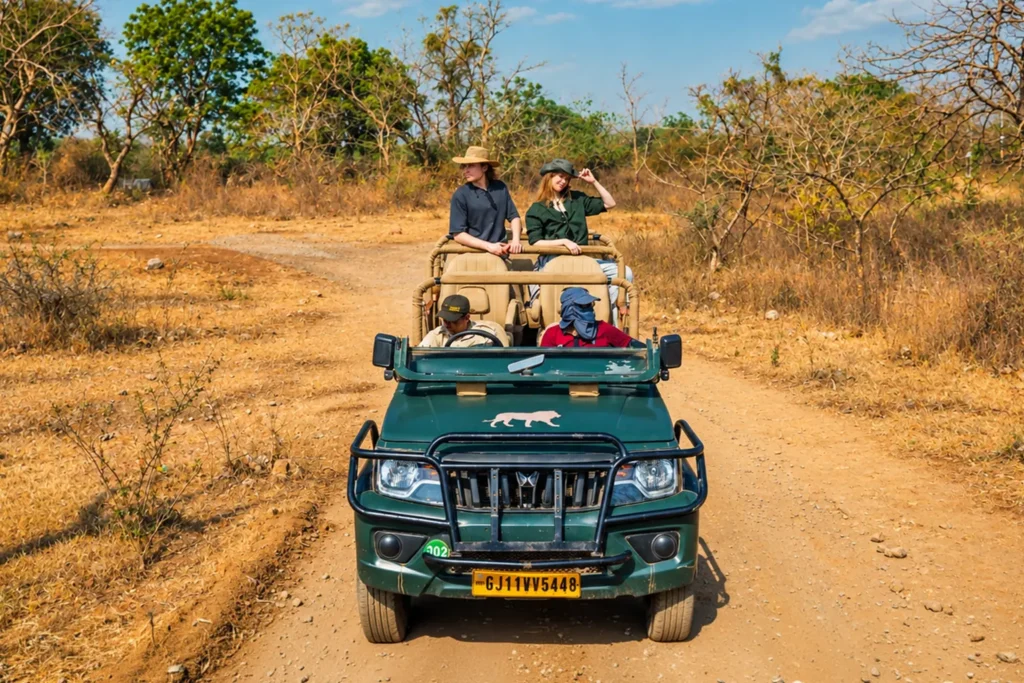
Your first jungle safari often begins before sunrise. The alarm rings at 5.30 am, you get ready in the dark, and you set out without knowing what the morning will bring. Outside, the forest is only just beginning to stir, and the morning feels different from the one you have left behind. By the time you reach the gate, one question may already be on your mind. Will you see a tiger?
India is home to around three-quarters of the world’s wild tigers, but sightings are never guaranteed. A jungle safari in India is less about knowing what you will see and more about understanding how the forest works. Fresh tracks, alarm calls and changes in the behaviour of birds and animals can all tell you something about what is happening nearby.
Knowing what to expect makes your first safari easier to navigate. From entering the reserve and understanding your guide’s role to behaving responsibly around wildlife and settling back in at the resort, this guide covers what you need to know before you set out.
Key Takeaways
- Plan for an early start. Morning safaris usually last three to four hours, with wildlife sightings depending on conditions in the forest.
- Check the rules on mobile phones. Restrictions vary by reserve, so confirm what you can carry before your safari.
- Follow the guide’s instructions. Stay within the vehicle, keep noise to a minimum and follow the reserve’s rules on wildlife sightings and timings.
- Make time for the rest of the day. A safari is only one part of the experience. Conversations with your naturalist, walks around the property and time to reflect on the drive can add to your understanding of the forest.
The Safari Starts the Night Before
A little preparation the night before makes an early safari easier. Check your permit, keep the original ID used for the booking ready, and confirm your reporting time. Entry and exit times are fixed, and arriving late can mean missing your drive. If phones are restricted at your reserve, be prepared to leave yours at the gate.
What to Carry
- Original ID: Carry the same ID you used to book your safari permit. The details may be checked at the gate, so keep the original document handy rather than relying on a photograph or photocopy.
- Warm layers: Early morning drives can be chilly in an open vehicle, particularly between October and February. Wear layers so you can take them off as the sun comes up and the forest warms.
- Neutral-coloured clothing: Olive, beige and khaki are practical choices for a forest drive. They are less conspicuous than bright colours and comfortable for sitting in an open vehicle for several hours.
- Hat and sunglasses: The sun can feel strong once it rises, especially on open stretches of the forest. Carry a hat that stays in place while the vehicle is moving and sunglasses you can wear comfortably throughout the drive.
- Scarf: Dry forest tracks can get dusty, particularly when your vehicle passes over unpaved roads. A lightweight scarf helps keep dust off your face and neck.
- Reusable water bottle: Carry water to keep yourself hydrated during the drive, especially in warmer weather. Check the reserve’s rules on what you can bring inside and avoid disposable plastic bottles where possible.
What to Leave Behind
- Your phone, if restricted: Phone rules vary between reserves, so check them before you leave for your safari. If you need to make calls or share any last-minute updates, do so beforehand, as you may have to deposit your phone at the gate.
- Bright clothing: Leave vivid colours for another occasion and stick to muted shades such as olive, beige or khaki. These work well for a forest drive without requiring you to buy anything specifically for the safari.
- Unnecessary luggage: There is limited room in a safari vehicle, particularly when several guests are travelling together. Leave large bags and anything you will not need during the drive at your accommodation.
- Last-minute plans: Safari timings are fixed, and arriving late can mean missing your drive. Check your reporting time the night before and leave enough time to reach the gate, complete the entry checks and board your vehicle.
Booking ahead is also important, particularly during busy periods. In Madhya Pradesh, safari permits are released on a rolling 120-day booking window, so availability can be limited if you leave it until the last minute.
Once you have your permit and essentials ready, the next step is understanding the vehicle you will travel in and the people who will accompany you.
Open Gypsy, Canter or on Foot: How You’ll Move Through the Forest
The way you travel through the forest depends on the reserve and the type of wildlife safari experience you book. A Gypsy carries up to six guests, along with a driver and a mandatory forest guide. Your route and zone are assigned by the reserve rather than chosen by you. At Gir, for instance, there are 13 designated routes.
A Canter is a larger vehicle shared by more guests, with tickets sold by the seat. It operates in selected zones and is a practical option if you want a more affordable safari, though the larger group can make it harder to hear the guide or get an uninterrupted view. Some reserves also offer alternatives to vehicle safaris. At Satpura, walking safaris begin with a boat ride across the Denwa River, and canoeing is another way to explore the area. At Gir, the Devalia zone may suit families with limited time.
Morning drives generally last longer than afternoon safaris, which usually run for two to three hours. Timings and activities vary by reserve, so check the details before booking. Whichever option you choose, the guide plays an important role in what you notice along the way. Understanding their role can help you get more out of the drive.
Following the Signs of Wildlife
At first, it can be hard to understand what your guide is looking for. They might stop beside a patch of mud, point to tracks on the ground or pause to listen to a distant call. A fresh pugmark can indicate that a tiger passed through recently, while alarm calls from langurs, chital or peacocks may signal a predator nearby. Even the wind direction can help your guide work out where a sound is coming from.
Much of a three- to four-hour safari may pass without a tiger sighting. India recorded 3,682 wild tigers in its 2022 national assessment, but their numbers do not guarantee that one will cross your path. You might instead watch deer move through the trees, identify birds along the track or follow the signs your guide points out. Over time, these details help you understand what is happening around you, even when the animal you hoped to see remains out of sight.
If you do spot a tiger, the excitement can make you want to stand up, call out or reach for your phone. That is exactly when knowing how to behave matters most.
At a Sighting: Jungle Safari Tips
A tiger sighting can be exciting, but it is also when your behaviour matters most. Sudden movement, loud voices or vehicles crowding around an animal can disturb it and affect the sighting for everyone. Stay seated, keep quiet and follow your guide’s instructions.
What to Remember at a Sighting
- Avoid sudden movements or leaning out of the vehicle, which can disturb the animal and put you at risk.
- Shouting or calling out can disrupt the sighting and disturb nearby wildlife.
- Turn flash off before taking photographs, particularly when animals are close.
- Take all waste back with you rather than leaving anything behind in the forest.
- Where a five-minute limit applies, follow it so the animal is not surrounded by vehicles for too long.
- Follow your guide’s instructions and any reserve-specific distance rules to avoid crowding around a sighting.
- Your guide can judge when it is appropriate to wait and when the vehicle should leave.
Phone restrictions are another part of responsible safari behaviour. Following the Supreme Court’s November 2025 directions, restrictions are intended to help prevent drivers from alerting other vehicles to tiger sightings, which can lead to groups of vehicles gathering around one animal.
Cameras may be permitted subject to the reserve’s rules and applicable fees. A 100–400mm zoom lens lets you photograph wildlife from a distance, while a beanbag can provide support on the vehicle’s rail without the bulk of a tripod. Keep the shutter silent where possible, and remember to put the camera down now and then. A photograph is worth taking, but so is the time spent watching the animal without a lens between you.
After the Gate Closes: The Other Half of a Forest Safari Experience
The safari does not end when the vehicle leaves the forest. You return dusty and often still cold from the morning drive, sit down for breakfast and talk through what you saw with the naturalist. A pugmark, an alarm call or a brief sighting may mean more once you have time to discuss it and understand what was happening around you.
The middle of the day is usually slower. You can rest before the afternoon drive, particularly during warmer months, or spend time birdwatching and identifying species you noticed along the way. Some lodges have libraries or arrange nature walks, giving you other ways to learn about the landscape beyond the safari vehicle. If you are planning your day around two drives, check local timings in advance. In Madhya Pradesh, for example, core zones are closed on Wednesday afternoons.
Where you stay can also shape the experience. A lodge close to the gate means a shorter journey before an early start, while access to a resident naturalist can help you make sense of what you saw on the drive. At The Forest Chapter by Sayaji in Madhai and Sasan Gir, the time between safaris is part of the wider forest experience, with opportunities to slow down and reflect on the landscape beyond the drive itself.
Final Thoughts
You may still wonder whether you will see a tiger as your vehicle leaves the gate. But by now, you know there is more to a safari than waiting for one to appear. The forest has its own signs to follow, from fresh pugmarks on the track to alarm calls in the trees, and your guide can help you understand what they mean.
A tiger may cross your path, or the morning may pass with sightings of deer, birds and other signs of wildlife. Neither changes the value of the experience. When you know what to look for and take the time to observe, even a drive without a tiger sighting can leave you with a better understanding of the forest.
Frequently Asked Questions
1. What should I carry for a jungle safari in India?
Carry your original ID used for the safari booking, warm layers for early morning drives, neutral-coloured clothing, a hat, sunglasses, a scarf and a reusable water bottle. Also, keep in mind that in most major tiger reserves, phones must be deposited at the gate.
2. How long does a jungle safari in India last?
A safari generally lasts around three to four hours. Morning drives are usually longer, while afternoon drives often last around two to three hours. Entry and exit times are fixed by the reserve.
3. Will I definitely see a tiger on an Indian safari?
No, tiger sightings are never guaranteed. Guides look for signs such as pugmarks and alarm calls to understand where wildlife may be, but much of a safari can involve watching deer, birds and the forest itself.
4. What should I do when I see a tiger during a safari?
Stay seated and quiet, do not lean out or use flash, and follow your guide’s instructions. Respect the time and distance rules set by the reserve, and avoid crowding the animal with other vehicles.
5. Is a phone allowed on a jungle safari in India?
In most major tiger reserves, phones are deposited at the gate. This helps prevent drivers from sharing information about tiger sightings and drawing multiple vehicles towards the same animal. Cameras may be permitted, subject to the reserve’s rules and applicable fees.




 TYS