


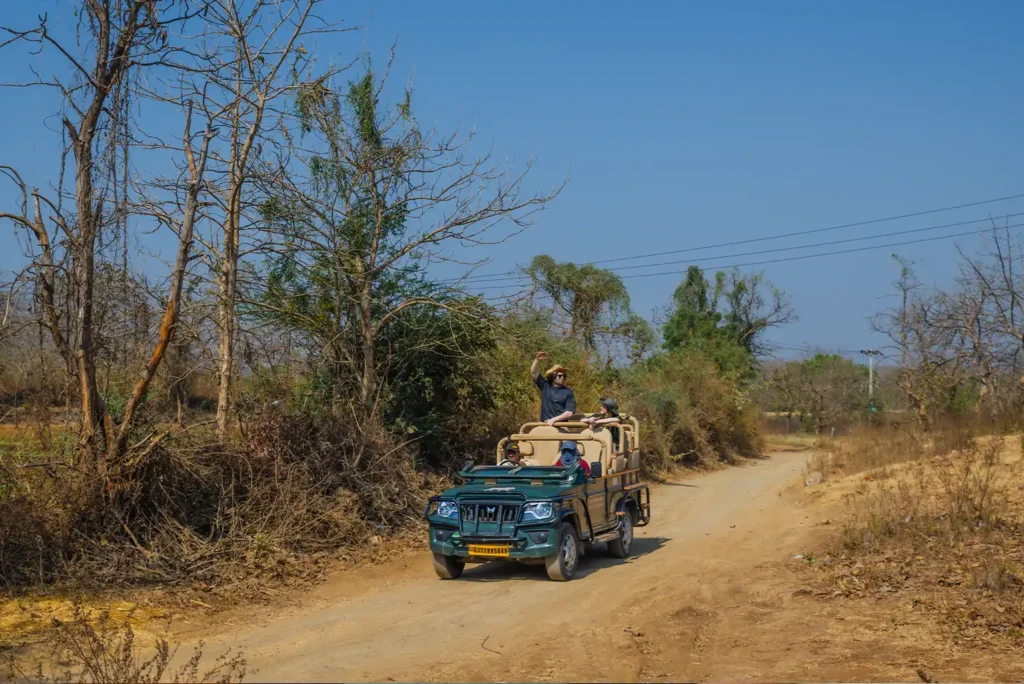
Before a safari, there is plenty to think about. You check the reporting time, charge your phone, pack your camera and hope you will see a tiger. What is easier to overlook is how you should behave once you are inside the forest. For first-time visitors, understanding that can be just as important as knowing what to bring.
Many safari incidents in India’s forests are linked to visitor behaviour rather than animal attacks. Leaving the vehicle, moving too close to an animal or making unnecessary noise can turn a wildlife encounter into a risky one. Once you are in the forest, the distance between you and the animal is not yours to decide.
It is also worth checking the forest safari precautions you should take before leaving. Safari rules can vary between protected forest areas, including restrictions on what visitors can carry or use during a safari. Checking the rules for your particular reserve before you arrive can help you avoid problems once the safari begins.
Key Takeaways
- Stay seated, keep quiet and never leave the vehicle unless forest staff instructs you to.
- Mobile phones are now banned in the core tourism zones of India’s tiger reserves. Carry a camera instead and check the rules of the park you are visiting before you go.
- Dress in muted earth tones and layers. Forest mornings can be cold even when afternoons are hot.
- Follow your guide’s instructions, particularly when an animal reacts or changes its behaviour.
Why Most Safari Risks Come From Visitors, Not Wildlife
When you enter a forest for the first time, it is easy to assume the animal is the unpredictable part. But your own behaviour matters just as much. Staying seated, keeping quiet and giving an animal space are not formalities. They help keep a calm sighting that way, without making the animal feel crowded or threatened.
You can see how quickly things can go wrong on a real safari. In one reported incident at Umred-Pauni-Karhandla Wildlife Sanctuary, tourists in several vehicles crowded a tigress and her cubs, blocking their movement as they tried to photograph them. The tourists were permanently banned, while drivers and guides were also penalised. In November 2025, the Supreme Court intervened over tourism practices in tiger reserves, reinforcing the need to follow NTCA guidelines.
The takeaway is simple. A good safari is not about getting closer. It is about knowing when to stay still, keep your distance and let the animal decide what happens next. That starts before you enter the forest, with knowing the rules and what you can and cannot carry with you.
Before the Gate: Documents, Phones and Safari Tips for India
A smooth safari starts before you reach the forest gate. Check your documents, entry time and the current rules for the reserve you are visiting. Regulations can vary between parks, so something that was allowed on your last safari may not be allowed this time.
- Carry the same ID you used when making the safari booking and report at least 30 minutes before your scheduled entry.
- Mobile phones are now banned in the core tourism zones of India’s tiger reserves. At Corbett, visitors can leave them in lockers at the gate. The restriction also applies to guides and drivers, while cameras are permitted subject to the applicable fees.
- Check your reserve’s current rules before you travel, particularly for any restrictions on phones, cameras and other items.
- Leave plastic behind and do not carry food intended for animals.
- Pets are not permitted inside the forest.
Once you have these details sorted, there is less to deal with at the gate and more attention left for the forest. It is worth thinking about what you wear too, as it can affect both comfort and ease of movement.
Dress for the Forest, Not the Photograph
On safari, comfortable clothing makes a difference. Choose muted colours such as khaki, olive and beige, and avoid bright colours, white and neon shades. Long sleeves and trousers can also help protect you from insects.
Forest temperatures can change sharply through the day, so layers are useful in winter. If you are staying around Madhai, whether at The Forest Chapter by Sayaji or elsewhere in the area, mornings can begin at around 4–5°C before becoming much warmer later in the day. In summer, when temperatures can rise above 40°C, a scarf can help keep the dust off. Closed shoes and a hat are useful too, particularly if you are spending time outside the vehicle.
If you are going on a walking safari, leave the perfume at home. Strong scents can carry through the forest and are best avoided. Once you are dressed for the conditions, the next thing to think about is how you behave inside the vehicle, where how you behave can make a real difference.
Inside the Vehicle: Safari Safety Tips for Exploring the Forest
Once the safari begins, how you behave matters as much as the wildlife safari rules themselves. Most encounters are calm, but wildlife can react without warning. Remain seated and quiet, allowing the guide and driver to respond if the animal’s behaviour changes.
- Stay seated and hold on: Never stand or lean out of the vehicle, even when an animal is close. In October 2024, a girl fell from a safari vehicle in Kaziranga when the driver accelerated after spotting two rhinos. Her mother fell while trying to help. Both sustained minor scratches and received medical attention.
- Keep your voice low near wildlife: Avoid loud conversation, shouting or sudden noises, particularly when an animal is nearby. Noise can disturb wildlife, cause an animal to retreat or interrupt a natural interaction.
- Never ask the driver to get closer: The instinct to get closer can be strong when you finally spot an animal, especially when you are trying to photograph it. Do not encourage the vehicle to chase, crowd or block an animal for a better photograph.
- Respect the speed limits: Follow the speed limit set by the reserve you are visiting. In Madhya Pradesh, safari vehicles in tiger reserves are restricted to 20 km/h. These limits help drivers maintain control on forest roads and give them more time to react when wildlife appears on or near the track.
- Follow the guide’s instructions: If an animal changes direction, approaches the vehicle or shows signs of agitation, follow the guide’s directions rather than making sudden movements, calling out to the animal or asking the driver to move closer.
- If an elephant or rhino charges, stay seated and quiet: Do not shout, stand or lean out. Let the driver respond and reverse if necessary. In one such incident in Kabini in 2022, a tusker charged a safari vehicle while the driver calmly reversed until the elephant moved away. It is a useful reminder that sudden wildlife encounters are for the driver and guide to manage, not the passengers.
- On a walking safari, stay in single file. Keep behind the armed guards, stay on the marked route and do not move ahead or away from the group. In Satpura, walking safaris can take you through forest away from the vehicle routes, so staying together is essential.
- On water, follow the same principle. Whether you are travelling by canoe or taking part in another guided water experience, remain seated when instructed, keep your voice low and avoid sudden movements.
Photographing Wildlife Without Putting Anyone at Risk
A close wildlife sighting can make you forget everything you were told before entering the forest. Photography is often where that discipline is tested most. When an animal finally appears, it is easy to focus on getting the photograph and forget about everything happening around you.
The rules around photography can also vary between reserves. Flash photography, for example, is not permitted in Gir, so check what is allowed before your safari. Under the new rules, visitors must also use a camera rather than a phone in the core tourism zones of tiger reserves.
Once you have your camera ready, stay where you are. If an animal is already in view, there is no reason to ask the driver to move closer or position the vehicle for a better angle. Crowding an animal or blocking another vehicle can turn a good sighting into an uncomfortable one for everyone. The same consideration applies when photographing local people. Ask before taking their picture rather than treating them as part of the scenery.
You do not need to be closest to get a good photograph. Sometimes the better shot comes from waiting, watching and letting the animal continue on its way.
Final Thoughts
A safe safari begins with being prepared and knowing what to do once you enter the forest. Follow the rules, stay seated, keep your voice down and listen to your guide. When an animal appears, give it space and let the guide decide how to respond.
Once you settle into that way of watching, you start to notice more around you. A movement in the grass, a call from the trees or an animal appearing briefly between the branches can all become part of the sighting. You do not need to do anything to make the moment happen.
That is what makes a forest safari in India so rewarding. You are there to watch the forest as it is, giving each encounter the space to unfold naturally.
Frequently Asked Questions
1. What should you avoid doing on an Indian forest safari?
Do not leave the vehicle, ask the driver to move closer to wildlife, make unnecessary noise, feed animals or disturb their behaviour. Always follow your guide’s instructions.
2. Can you take your phone on a tiger safari in India?
Mobile phones are banned in the core tourism zones of India’s tiger reserves. Carry a camera instead and check the specific rules of the reserve you are visiting.
3. What should you wear on a forest safari?
Choose comfortable, muted colours such as khaki, olive or beige. Wear layers in colder months, along with long sleeves, trousers, closed shoes and a hat.
4. Can you use flash photography during a wildlife safari?
Photography rules vary between reserves. Flash photography, for example, is not permitted in Gir, so check the rules of the reserve before your safari.
5. What should you do if an animal approaches the safari vehicle?
Stay seated and quiet, avoid sudden movements and follow your guide’s instructions. Do not ask the driver to move closer or try to influence the animal’s movement.




 TYS