


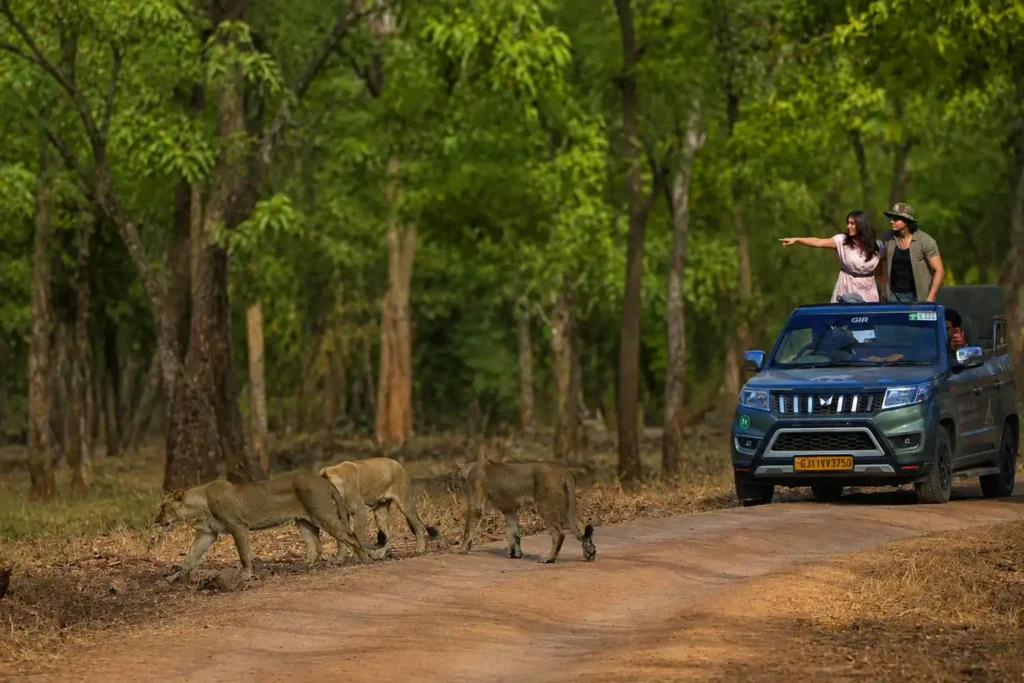
A wildlife holiday in India is about more than the animals you see. The forest you enter, the way you travel through it, the rules you follow and where you stay all shape your experience of the place.
India is home to about 75% of the world’s wild tigers, spread across 100+ national parks. But the wildlife experience in India goes well beyond tiger sightings. Every forest has its own character and offers different ways to experience it, from open jeep safaris and walks to waterways, local encounters and quiet time spent watching the landscape.
These details matter when planning a wildlife trip. This guide looks at India’s forest landscapes, the different ways you can explore them, how responsible wildlife tourism in India affects the experience and how your stay can become part of the experience rather than simply being a base for the itinerary.
Key Takeaways
- Choose the forest based on the experience you want, not just the animal you hope to see.
- Plan ahead. Safari slots, permits and monsoon closures vary across states.
- Know the rules. Phone use and night safaris are subject to restrictions.
- Where you stay matters. Your lodge can shape what you see and how you understand the landscape.
India’s Wildlife Landscapes: Six Very Different Experiences
When people think of wildlife tourism in India, they often picture a tiger in the forest. But India’s wildlife landscapes are far more varied. There are around 106 national parks in India and 564 wildlife sanctuaries, spanning forests, grasslands, wetlands, mangroves and river systems.
- Central India — Kanha and Satpura are home to extensive sal and teak forests, with open meadows and rivers creating varied habitats for wildlife. Safaris offer opportunities to spot tigers, leopards, sloth bears and several species of deer.
- Terai and Shivalik — In the foothills of the Himalayas, Jim Corbett National Park moves between dense forests, open grasslands and river corridors. The changing landscape gives you a different view of the forest as you travel through it, with elephants, deer, tigers and abundant birdlife found across the park.
- Floodplain grasslands — Kaziranga lies along the Brahmaputra floodplain, with vast grasslands and wetlands spread across the park. The open terrain gives you a clear view of the surroundings, and you may spot the greater one-horned rhinoceros, wild water buffalo and swamp deer.
- Dry deciduous forest — Gir is the only place in the world where Asiatic lions survive in the wild. The park has dry deciduous forests, open scrub and seasonal streams, giving you a landscape very different from Central India’s tiger reserves.
- Western Ghats — Kabini and Periyar have moist forests, bamboo and evergreen vegetation, with rivers and reservoirs running through the landscape. Elephants are a common sight, while langurs, macaques and a wide variety of birds add to the wildlife you can see.
- Mangroves — The Sundarbans is a maze of tidal waterways, mangrove forests and mudflats, where the landscape changes with the movement of the tide. Safaris take place by boat, and you may spot Bengal tigers, estuarine crocodiles, spotted deer and water monitors along the banks.
How a Wildlife Safari in India Actually Works
A jungle safari in India is usually built around the park’s timings, entry zones and permitted routes. Most parks offer morning and afternoon drives, while some also let you explore by boat, on foot or on elephant back.
- Jeep safari — The most common option across tiger reserves and wildlife destinations in India, with up to six people entering designated core or buffer zones. In Madhya Pradesh, typical safari timings are 6:00–11:30 am and 3:00–6:00 pm. However, timings can change depending on the month and season.
- Canter safari — Corbett offers shared canter safaris, particularly in the Dhikala zone. During winter, shifts generally start around 6:00 am and 2:30 pm, while summer timings change with the longer daylight hours.
- Boat safari — In Periyar, you see the forest from the water, with boats typically leaving at 7:30 am, 9:30 am, 11:15 am, 1:45 pm and 3:30 pm. Meanwhile, in the Sundarbans, boats are the main way to travel through the tidal waterways and mangroves.
- Elephant safari — Kaziranga offers morning elephant safaris in two shifts, generally from 5:30–6:00 am and 6:30–7:30 am. The park has reopened for the 2026–27 season, with elephant safaris expected to resume shortly afterwards.
- Walking safari — Satpura allows guided walks through the park, offering a different way to experience the forest. Current timings are 6:30–10:00 am and 4:00–6:00 pm, although these vary by season.
- Booking and seasons — You cannot assume that every park follows the same booking system or opening dates. Madhya Pradesh opens bookings 120 days ahead, while Corbett’s Bijrani day safaris open 45 days in advance, and seasonal closures vary by zone and park.
So, before you book, check the timings, zones, booking rules and seasonal dates for the park you are visiting. A safari in Corbett can work quite differently from one in Satpura, Kaziranga or Periyar.
Responsible Wildlife Tourism Is Now Written Into the Rules
Wildlife tourism is growing quickly, and that growth is changing how protected areas are managed. In Kaziranga, for example, visitor numbers have increased fourfold in the past decade, reaching more than 468,000 in 2025–26.
The Supreme Court’s November 2025 directions introduced tighter controls on tourism in tiger reserves. These include restrictions on mobile phones in core tourism zones, a ban on night tourism, silence zones and limits on tourist vehicles. For you as a visitor, following your guide’s instructions, keeping noise down and respecting the rules of the reserve are simple parts of responsible safari behaviour.
That responsibility does not end when you leave the safari vehicle. Choosing experiences that involve nearby communities can help you understand the people and places around these forests, while respecting local rules helps you observe wildlife without disturbing it. The same approach also extends to where tourism infrastructure is built and how lodges operate around protected areas.
Where You Stay Shapes What You See
Where you stay can affect how your safari unfolds. A lodge’s location can make it easier to reach your booked zone, while resident naturalists can add context to what you see. Meals and other experiences also need to fit around early morning and afternoon safari timings.
Your stay can also take you beyond the forest through local knowledge and community-led experiences. The Supreme Court has directed that new resorts should be limited to buffer zones while encouraging homestays and community-managed establishments.
India’s safari tourism market is projected to grow from USD 2.8 billion to USD 5.3 billion by 2035. As the market grows, The Forest Chapter by Sayaji takes a straightforward approach to forest hospitality. Nature remains central, while comfort and care support the experience. With chapters in Sasan Gir and Madhai, Satpura, the brand keeps the surrounding landscape at the centre of the stay.
Planning a Wildlife Holiday by Experience, Not by Ranking
A well-planned wildlife holiday starts with the experience you want, rather than a list of the most famous parks. Once you know what you want from the forest, the rest of the trip is easier to plan.
- Start with the landscape: Dense forest, open grassland, wetlands, riverine habitat and Western Ghats landscapes offer very different experiences. Think about the kind of terrain you want to spend time in before choosing the park.
- Choose the season carefully: Check when the park is open, then look at local weather and seasonal wildlife conditions. The same forest can feel very different at the start and end of its safari season.
- Book the safari early: Popular parks and core zones can fill up well in advance. Check the state’s permit system, booking window and entry zone before confirming the rest of your trip.
- Choose the lodge around your safari: Your lodge should work with the safari you have booked. Check how close it is to your entry gate, whether naturalists are available and whether the stay fits comfortably around early morning and afternoon drives.
- Give yourself enough time: Two to three nights and several safari drives give you more than one chance to experience the forest. Wildlife sightings are never guaranteed, so planning the trip around a single safari can leave too much to chance.
Final Thoughts
Wildlife tourism in India makes more sense when the forest, safari, rules and stay are planned as one experience. The landscape determines how you explore it, the rules shape how you behave within it, and the stay can add context to what you see beyond the safari vehicle.
Planning this way also changes what you expect from a wildlife holiday. It becomes less about ticking off a park or hoping for a particular sighting, and more about giving yourself time to understand the place you have travelled to.
Frequently Asked Questions
1. What is the best way to plan a wildlife safari in India?
Start by choosing the landscape and experience you want, then check the safari season, permit window and suitable lodge near your booked gate.
2. How long should you stay on a wildlife holiday in India?
Two to three nights with several safari drives gives you enough time to experience the forest without relying on a single safari.
3. What types of wildlife safaris are available in India?
Depending on the destination, you can explore by jeep, canter, boat, elephant or on foot. The format varies with the landscape and park regulations.
4. What should you look for when choosing a wildlife lodge?
Consider its proximity to your safari gate and zone, access to naturalists, safari-friendly meal timings and opportunities to connect with local communities.
5. What are the key responsible tourism rules for wildlife safaris?
As a tourist, you should follow your guide’s instructions, keep noise to a minimum, respect vehicle and zone limits, and follow the rules governing phones and night tourism in protected areas.




 TYS