


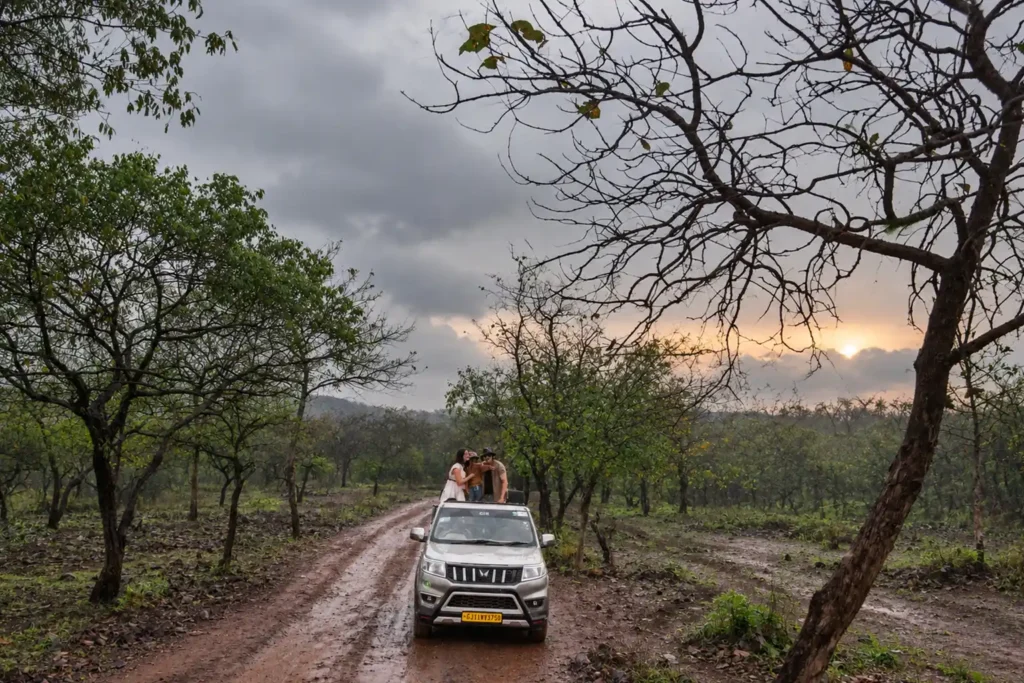
Monsoon transforms India’s wild landscapes, turning forests greener, rivers fuller and the air quieter. For wildlife travellers, it can be an especially rewarding time to experience the country, provided you know where to go.
India’s monsoon wildlife calendar is more varied than it first appears. While famous reserves such as Gir, Kaziranga and many of central India’s tiger reserves close their core zones during the rains, buffer zones and some curated wildlife experiences continue to offer safaris through the season. There is also plenty to discover beyond the safari, from regional food and local traditions to historic sites and nearby destinations.
This guide brings together five best places to visit in India during monsoon that make the most of the season in different ways. Three offer safari experiences through the monsoon, while two put the wider destination at the heart of the journey.
Key Takeaways
- Monsoon does not mean the end of wildlife travel. Some destinations continue to offer safaris, while others shift the focus to the wider landscape.
- Kabini and Periyar keep wildlife experiences going through the rains, particularly around their waterways.
- In places such as Satpura and Sasan Gir, safaris pause during the monsoon, but the forests, waterways and surrounding landscapes remain open to exploration.
- Coorg shows how a monsoon wildlife escape can extend into plantations, waterfalls and local landscapes.
- The best monsoon destination depends on whether you want an active wildlife experience or a slower escape shaped by the season.
Why Monsoon Safaris Aren’t What Most Travellers Expect
Across several major national parks, core safari operations pause for roughly three months, from July through September, while some reserves begin their monsoon closure in mid-June and reopen by mid-October. This does not mean the wider destination goes quiet. There is still plenty to experience beyond the core safari, from local food and culture to surrounding landscapes and attractions.
Elsewhere, wildlife travel continues through the monsoon. Kabini and Periyar, for instance, remain open, with their waterways and backwater landscapes supporting wildlife experiences that differ from conventional jeep safaris. The takeaway is simple. A monsoon wildlife holiday offers a different side of a destination, but choosing the right rainy-season destinations in India makes all the difference.
Top Monsoon Destinations in India for a Luxury Wildlife Escape
1. Kabini — Elephant Congregations Along Karnataka’s Backwaters
Kabini is one of the more dependable choices for a monsoon wildlife escape, particularly for travellers hoping to see elephants. While many traditional jeep safari destinations pause during the rains, boat safaris here continue through the monsoon, offering a different perspective of the forest and its wildlife.
Part of the larger Nagarhole ecosystem, Kabini sits around 208 km from Bengaluru, making it a relatively accessible wilderness break for travellers from the city. The monsoon also brings its own appeal for photographers, with softer light, greener landscapes and the chance to capture elephant activity around the waterways.
Beyond the safari, the Kabini River shapes much of the experience, while the surrounding villages, coffee and spice plantations and countryside offer a glimpse into rural Karnataka. Together, these experiences make Kabini more than a safari stop, particularly during the monsoon when the landscape is at its greenest.
2. Periyar (Thekkady) — Kerala’s Lake-Based Wildlife Escape
Periyar is another strong option for a monsoon wildlife escape, particularly for travellers who want to experience the forest without relying on a jeep safari. Boat safaris on Periyar Lake continue through the monsoon, allowing visitors to explore the forest from the water while the surrounding hills turn deep green with the rains.
The lake shores are especially interesting during this season, when fresh monsoon grass draws elephants towards the water. The changing light, misty hills and reflections across the lake also give the experience a distinctly different character from a dry-season safari.
There is plenty to explore beyond the lake as well. Thekkady is surrounded by spice plantations, where guided walks offer an introduction to Kerala’s cardamom, pepper and other crops. The nearby hills and waterfalls add another layer to the landscape, making Periyar well suited to a monsoon escape that combines wildlife with the food, culture and natural character of Kerala.
3. Satpura (Pachmarhi) — Where the Waterfalls Take Over
Satpura takes a different approach to the monsoon. From 1 July to 30 September, all safari activities in the reserve are closed, giving the forest a seasonal pause. But the wider Satpura landscape remains worth exploring, with Pachmarhi coming alive with rain, flowing streams and waterfalls during these months.
The monsoon is when Pachmarhi’s waterfalls are at their most dramatic. Rajat Prapat, the region’s tallest waterfall at around 350 ft, drops through the forest, while Bee Falls and Duchess Falls swell with the rains. The surrounding landscape is equally striking, with Dhoopgarh, Madhya Pradesh’s highest point at 1,352 m, often disappearing into the monsoon clouds.
Further along the Denwa landscape, Madhai offers a quieter setting for a monsoon stay. The Forest Chapter by Sayaji in Madhai sits along the Denwa Reservoir, just across from the core zone, placing guests close to the forest while offering a peaceful base to experience the river, surrounding landscape and slower rhythms of the monsoon.
4. Coorg — Where Coffee Country Meets the Forest Corridor
Coorg sits at an interesting intersection of coffee country and the forest corridor of southern Karnataka. Its eastern stretches connect with the wider Nagarhole landscape, while Dubare Elephant Camp brings visitors closer to the forest along the Cauvery. It gives Coorg a stronger wildlife connection than its reputation as a hill station might suggest.
The monsoon changes the landscape dramatically. Abbey Falls swells with rainwater amid the coffee plantations, while Iruppu Falls thunders through the forest near the Brahmagiri hills. Mist settles over the surrounding valleys and the plantations take on a deep green hue, making this one of the most atmospheric times to explore Coorg.
Coorg is also home to a notable concentration of luxury monsoon resorts in India set within or around coffee estates. Days here can move between plantation walks, local Kodava food, waterfalls and time spent simply taking in the landscape, making it a natural choice for a monsoon escape that combines the forest with the character of the region.
5. Sasan Gir— A Different Kind of Lion Country in the Rains
Sasan Gir takes on a different character during the monsoon. The core sanctuary remains closed from 16 June to 15 October, but Sasan Gir and its surrounding landscape still offer plenty to explore.
A road drive towards Kamleshwar Dam winds through a lush green canopy, while a walk through Sasan village offers a closer look at everyday life and the pastoral traditions of the Maldhari community. The Sasan Gir ecosystem is also home to more than 300 bird species, adding another dimension to the landscape during the rains.
For a slower monsoon stay, The Forest Chapter by Sayaji in Sasan Gir offers a perfect base to experience the region beyond the safari. Junagadh and Girnar can be added to the itinerary, while Somnath makes a natural extension for those looking to combine Sasan Gir with temples, local culture and regional history.
Final Thoughts
Monsoon holidays in India to a national park can look very different depending on where you go. In some places, the season keeps the safari experience going, while in others, the forest is left to rest and the wider destination comes into focus.
This makes understanding these best places to visit in India during monsoon season an important part of planning a monsoon trip. Some travellers may want to follow wildlife through a season of rain, while others may enjoy experiencing a quieter forest and everything around it. Both offer a different perspective on wildlife travel, and understanding that difference can help you choose a destination that suits the kind of monsoon escape you have in mind.
Frequently Asked Questions
1. Is monsoon a good time for a wildlife holiday in India?
Yes, while some national parks close their core zones, destinations such as Kabini and Periyar continue to offer wildlife experiences, while places such as Satpura and Sasan Gir offer other ways to experience the landscape.
2. What can you do at Sasan Gir when the safari is closed?
You can explore the Kamleshwar Dam road, visit Sasan village, experience Maldhari culture and extend the trip to Junagadh, Girnar, or Somnath.
3. Is Coorg worth visiting during the monsoon?
Yes, the season brings its waterfalls to peak flow and adds to the atmosphere of its coffee plantations, while the region also offers access to forest and wildlife experiences during the monsoon.




 TYS
TYS