


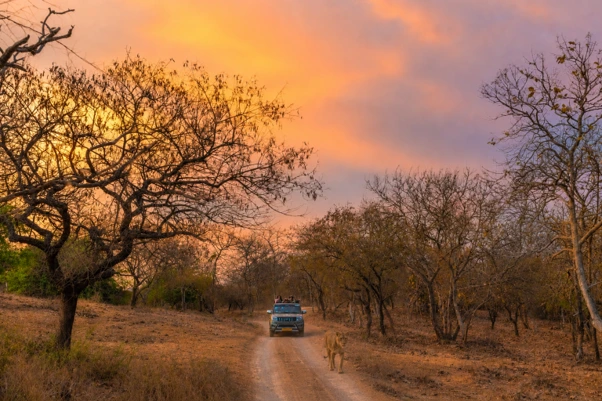
India’s wildlife story is changing, and 2026 offers plenty of evidence. Lion, tiger and rhino populations have all shifted in recent years, while conservation efforts are reshaping some of the landscapes where these animals live.
But the story is not limited to numbers. From snow leopard country in the high Himalayas and tiger forests in Central India to the wetlands of the Northeast, the dense Western Ghats and the dry forests of Gir, India offers wildlife experiences that are as varied as its geography.
That makes it crucial to look beyond a list that simply repeats India’s familiar national parks year after year. This guide explores the best places to visit in India for nature lovers, drawing on recent population estimates, conservation developments and what matters to travellers planning a wildlife trip now.
Because in wildlife travel, when you go matters, where you go matters, and what has changed matters too.
The Himalayan Wild — High-Altitude Wildlife
Wildlife in the Himalayas has a different set of rules. Sightings are harder to predict and the terrain can be demanding. But for travellers looking beyond the conventional safari, that is precisely what makes it so compelling.
1. Spiti Valley and Kibber Wildlife Sanctuary:
Spiti Valley offers one of India’s most unusual wildlife experiences, but it demands patience. Kibber Wildlife Sanctuary is snow leopard territory, and dedicated tracking trips can record sighting success of more than 50%. There are no guarantees, of course, but January to March is generally the best time to go, when winter conditions bring prey into more accessible areas.
The region has also seen a significant conservation development in recent years. The Tsarap Chu Conservation Reserve was notified in 2025, adding another layer of protection to the region’s high-altitude habitats. For travellers with more time, Pin Valley National Park and Chandratal can extend the journey beyond Kibber, offering a broader view of Spiti’s cold-desert landscape.
2. Kaziranga National Park:
With more than 2,613 greater one-horned rhinos, Kaziranga National Park holds roughly two-thirds of the world’s population of the species. That alone makes it one of India’s most important wildlife destinations. In June 2025, Kaziranga was expanded by more than 47,000 hectares, adding new protected areas to an already significant wildlife landscape.
November to April is generally the best time to visit, when conditions are more favourable for wildlife viewing. For travellers wondering what they can realistically see in Northeast India, Kaziranga offers one of the clearest answers. Come for the rhinos, but there is plenty more to look out for, from wild water buffalo and swamp deer to elephants, tigers and a wide range of birdlife.
Central India’s Tiger Heartland
Tigers remain one of India’s biggest wildlife draws, with tiger reserves accounting for nearly a third of wildlife visitors. Central India sits at the heart of this experience, with forests that offer very different ways to explore them.
1. Kanha National Park
Closely associated with the forests that inspired Rudyard Kipling’s The Jungle Book, Kanha fits the classic image of a Central Indian tiger landscape. Its sal forests open into broad meadows, creating a varied setting for jeep safaris. Tigers are naturally the main draw, but part of Kanha’s appeal is the setting itself, offering the kind of immersive nature getaway in India that goes beyond the safari.
Traditional jeep safaris remain the best way to explore Kanha, with early morning and afternoon drives offering opportunities to look for tigers alongside other forest species. For travellers seeking a classic Central Indian tiger safari, Kanha is an easy choice. It offers a combination of sal forests, open meadows, traditional game drives and the possibility of a tiger sighting that captures much of what makes this region so enduringly popular.
2. Satpura National Park
Satpura offers a different pace from the more familiar tiger-safari circuit. Its diverse, relatively quiet forests make the experience less about chasing tigers and more about spending time in the landscape. A key part of this is the opportunity for foot safaris, which offer a perspective that a jeep cannot.
This slower, more immersive experience begins at Madhai, the gateway to Satpura National Park. Set along the Denwa River, just across from the park’s core zone, Madhai puts you close to the forest while offering a landscape of its own to explore. The Forest Chapter by Sayaji at Madhai sits along the river, offering a stay that complements the experience. If Kanha represents the classic Central Indian tiger safari, Satpura offers a more varied way to experience the forest.
Where Forest Meets Water — Western Ghats and the Sundarbans
Beyond the tiger forests, India’s wild landscapes take on a different character. The Western Ghats offer dense, water-rich forests, while the Sundarbans present a very different landscape and way of exploring the wild. In both, the environment is as integral to the experience as the wildlife itself.
1. Kabini and Nagarhole
Set within the Western Ghats of Karnataka, Kabini and Nagarhole offer strong opportunities to encounter large mammals in a dense forest setting. Elephant herds are a defining sight, particularly around water sources, while the region is also known for leopards, which require more patience and luck to spot. Thick woodland, bamboo, water bodies and changing light make the experience distinct from open grassland safaris and long-distance viewing.
Kabini has also developed a strong ecosystem of luxury wildlife stays, with high-end, luxury wildlife resorts in India and lodges offering comfort without taking away from the sense of being close to the forest. For travellers seeking elephant and leopard encounters, Kabini and Nagarhole offer a compelling alternative to the conventional tiger circuit, with the focus on experiencing the wider Western Ghats habitat rather than chasing a single species.
2. Sundarbans
The Sundarbans shows just how much India’s wildlife experience can change with the landscape. It is the only mangrove tiger habitat on Earth, with approximately 101 tigers recorded on the Indian side in the 2022 census, and has been a UNESCO World Heritage Site since 1987 for the ecological importance of its vast mangrove ecosystem.
There are no conventional jeep safaris here. Instead, boat-based safaris move through tidal waterways, creeks and mangrove channels, with the forest unfolding from the water. Tigers can remain hidden, while crocodiles, deer, monkeys and birds offer other encounters. For travellers looking beyond the familiar jeep-safari format, the Sundarbans offers a different kind of wildlife experience where the landscape dictates how you explore it.
Gir — Asia’s Last Wild Lions
Gir stands apart from other wildlife destinations in India, as it is teh world’s only remaining home of wild Asiatic lions. The 2025 lion census recorded 891 lions, up from 674 in 2020, making Gir one of the best places to visit in India for nature lovers.
A safari experience here centres around finding lions in their natural habitat, while leopards, deer, antelope, and diverse birdlife add to the experience. Visitors require permits for designated safari zones, and advance booking is advisable during the busier season.
The story of Gir goes beyond the chance to see a lion in the wild. Once reduced to a few, Asiatic lions have made a significant recovery here. For travellers who want to explore this landscape at a slower pace, The Forest Chapter by Sayaji in Sasan Gir offers a premium base where the surrounding forest is part of the experience, not simply a backdrop.
Final Thoughts
India’s wildlife story in 2026 reflects a landscape in recovery, but the more interesting shift is in how travellers experience it. Conservation gains are strengthening some of the country’s most important wild landscapes, while destinations across different ecosystems offer experiences that go beyond the conventional safari.
The best wildlife journeys are about more than a few hours in the forest. They are about choosing the right pace, staying longer and paying closer attention to the landscape. A comfortable base, time to walk through the forest or simply space to slow down can all shape the experience. Here, luxury has a quieter role in making it easier to spend more time in nature without getting in the way of it.
Frequently Asked Questions
1. What are the best places to visit in India for nature lovers in 2026?
Top choices include Spiti, Kaziranga, Kanha, Satpura, Kabini, Nagarhole, the Sundarbans and Gir, each offering a different wildlife experience.
2. What is the best time to visit India for a wildlife holiday?
It depends on the destination. Spiti is best from January to March, while Kaziranga is best from November to April. Other nature destinations in India have their own ideal safari seasons.
3. Which Indian wildlife destination is best for a luxury nature holiday?
Madhai, Sasan Gir, Kanha and Kabini offer strong options for combining wildlife experiences with premium stays.
4. Where can I experience wildlife beyond a traditional jeep safari?
If you want to experience wildlife beyond a jeep, Satpura offers foot safaris, while the Sundarbans takes you through its mangrove waterways on boat-based safaris.
5. Why is Sasan Gir unique among India’s wildlife destinations?
Sasan Gir is home to the world’s only wild population of Asiatic lions, making it unlike India’s more conventional tiger-focused parks.




 TYS
TYS